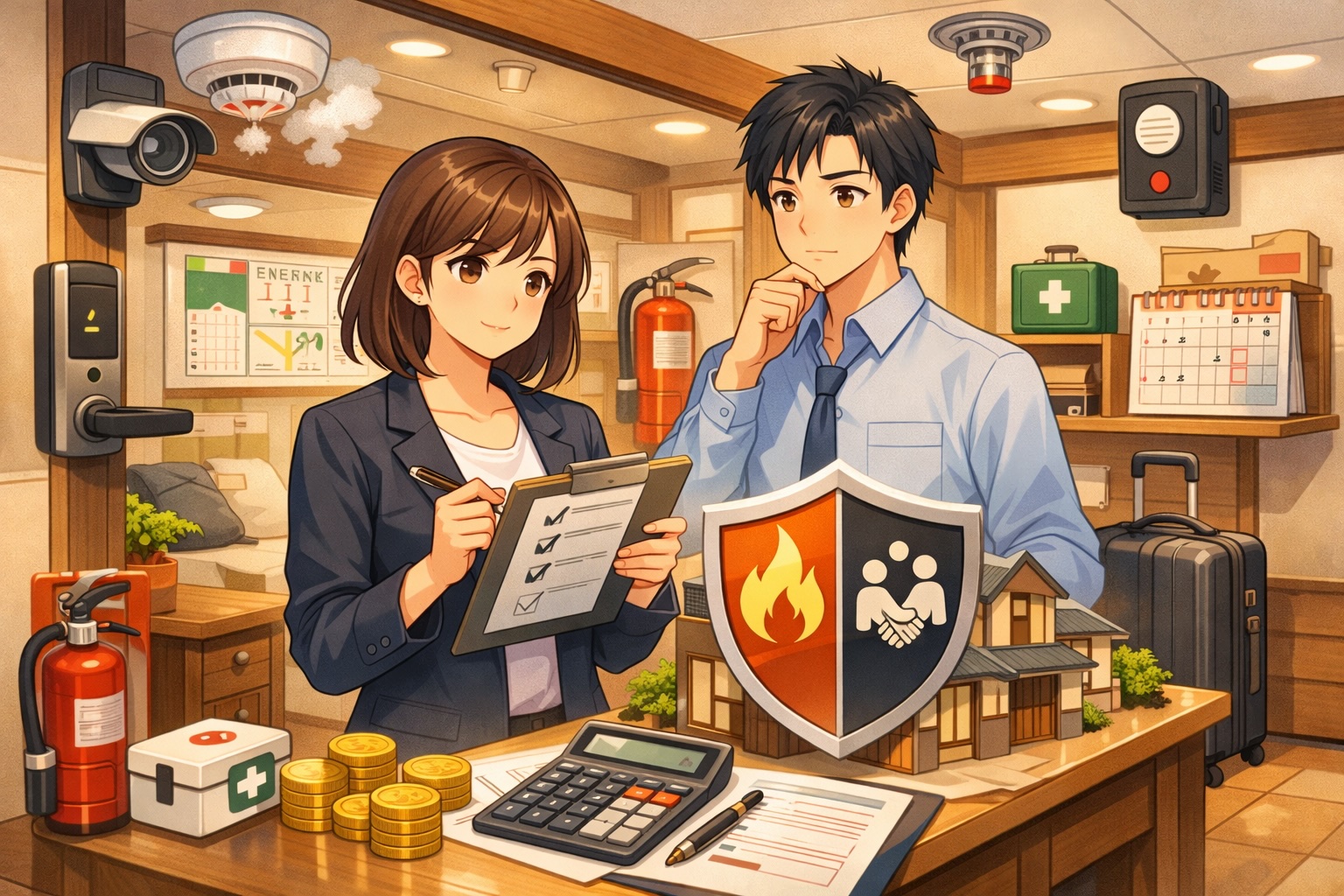
Investment success depends not only on upside returns but also on limiting unexpected losses. With short term rentals, higher guest turnover raises incident risk, making insurance planning a core pillar of the strategy.
1. Core insurance types
Japanese investment properties rely on fire insurance and optional earthquake insurance. Fire insurance should extend beyond fire to cover water damage, storm damage, and accidental breakage. Earthquake insurance is added only alongside fire coverage.
⸻
2. Risks unique to short term rentals
Short term rentals face guest caused damage, neighbor claims, and leak incidents. Adding facility liability and personal liability riders with coverage of at least ¥100,000,000 is common best practice.
⸻
3. Setting coverage amounts
Building coverage should reflect replacement cost, not book value. Underinsuring reduces payouts, while overinsuring wastes premiums. Contents coverage should align with the total cost of furniture and appliances, accounting for faster wear in short term use.
⸻
4. Premiums versus cash flow
A practical target is keeping annual premiums within 3 to 5% of NOI. Even with enhanced coverage for short term rentals, confirm affordability through after tax cash flow and pricing power via ADR.
⸻
5. Handling incidents
When incidents occur, create photo evidence and a timeline memo immediately, then notify management and insurers the same day. Because downtime equals lost revenue, confirm whether business interruption coverage is included.
⸻
6. Takeaway
Insurance planning is not a cost but defensive capital allocation. For short term rentals, aligning coverage scope and limits protects cash flow and stabilizes long term investment performance.