In real estate investment, how expenses are classified has a major impact on tax treatment and cash flow. This is especially important when comparing long term leasing and short term rental operations. This article explains the practical distinction between repairs and capital expenditures.
1. What Qualifies as Repairs
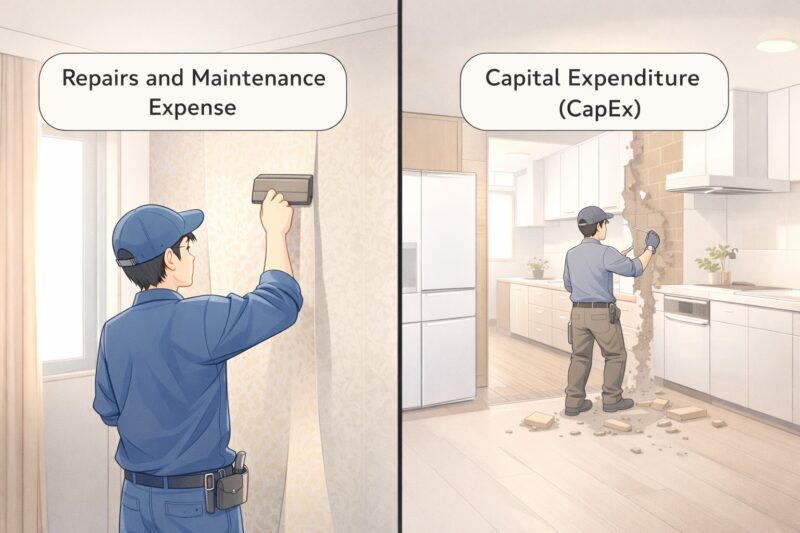
Repairs are expenses made to restore or maintain the original condition of a property. Typical examples include wallpaper replacement, minor equipment fixes, and small appliance repairs. These costs are generally fully deductible in the year incurred, providing immediate tax benefits.
⸻
2. Understanding Capital Expenditures
Capital expenditures improve the value of the asset or extend its useful life. Full kitchen replacements, layout changes, and major upgrades fall into this category. Such costs cannot be deducted at once and must be depreciated over several years.
⸻
3. Key Considerations for Short Term Rentals
Short term rentals often involve higher spending on interiors and furnishings, making capital expenditure classification more common. Renovations aimed at boosting occupancy or nightly rates are more likely to be treated as capital investments rather than repairs.
⸻
4. Simple Case Example
For a 15 year old condominium, assume ¥300,000 spent on wallpaper replacement and ¥1,200,000 on a full kitchen upgrade. The wallpaper qualifies as a repair and is expensed immediately, while the kitchen upgrade is depreciated over its useful life. Identical projects can have very different tax outcomes.
⸻
5. Impact on Investment Decisions
Whether a cost is treated as a repair or a capital expenditure directly affects current year cash flow. In short term rental investments, where upfront renovation costs are common, projecting after tax returns in advance is essential.
⸻
6. Takeaway
The distinction between repairs and capital expenditures is not just an accounting detail but a core driver of investment performance. Clear classification and long term cash flow planning lead to more stable and predictable real estate operations.