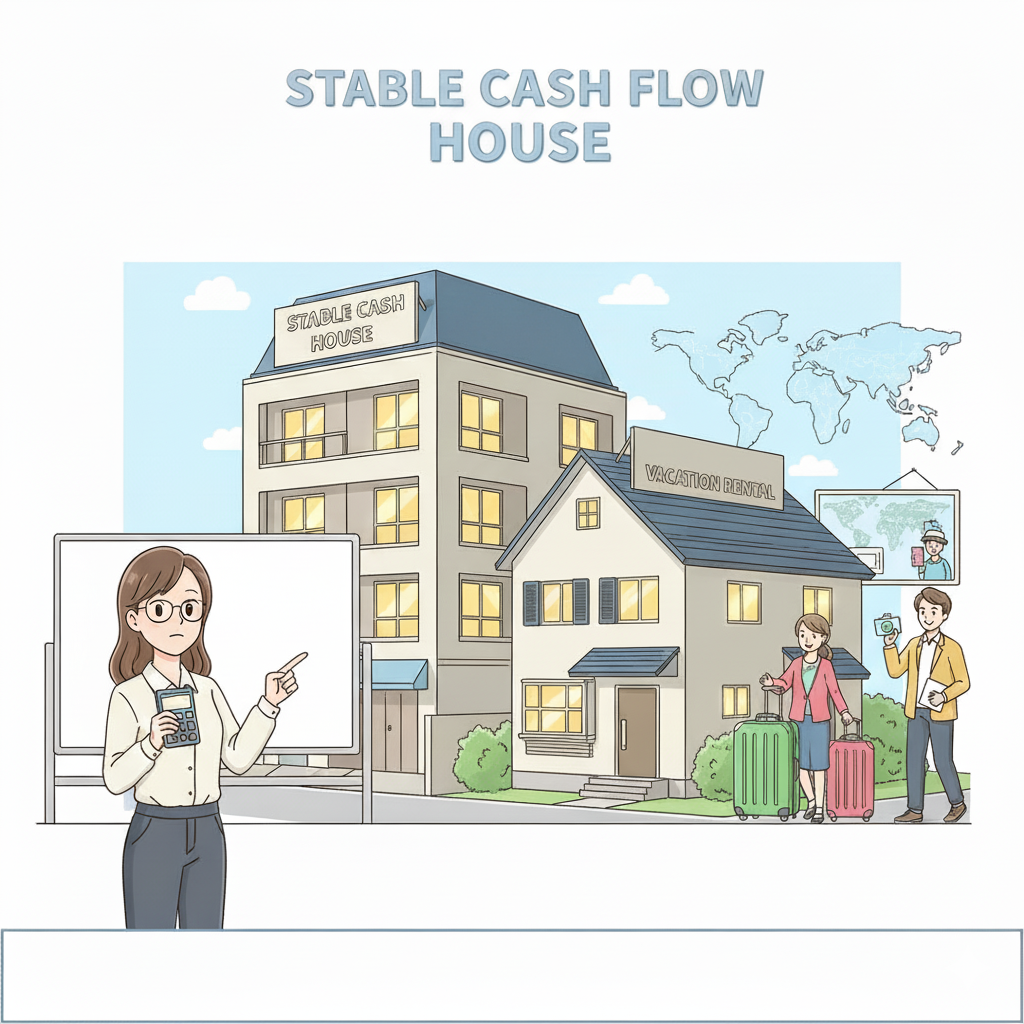
This version rebuilds the model for a purchased condo or house. Compared with a lease, fixed costs are higher but more predictable.
1. Fixed costs for ownership
Include the full monthly loan payment (principal and interest) monthly accrual of property and city planning taxes HOA management fee and reserve fire insurance monthly accrual and internet plus base utilities. Exclude depreciation from cash break-even because it is non-cash though relevant for tax.
2. Variable costs and metrics
Variable costs are cleaning cost allocated per night, consumables, and payment fee around 3% of revenue. Key metrics are occupancy, ADR, and RevPAR = ADR × occupancy.
Formulas
Break-even occupancy = Fixed cost ÷ {ADR − variable per night} ÷ days in month
Break-even ADR = Fixed cost ÷ occupied nights + variable per night
3. Case study with ownership inputs
Assumptions Loan balance ¥22,400,000 at 1.2% for 30 years monthly payment ≈ ¥74,124. Monthly accruals taxes ¥11,667, HOA ¥10,000, reserve ¥8,000, fire insurance ¥1,000, internet ¥5,000, base utilities ¥6,000.
Total fixed cost ≈ ¥115,791.
Variable Cleaning ¥6,000 per turnover average stay 2.5 nights, consumables ¥500 per night, payment fee 3%.
If ADR ¥12,000 variable per night ¥3,260 margin ¥8,740 nights needed ≈ 13.25 occupancy ≈ 44%.
If ADR ¥9,000 variable per night ¥3,170 margin ¥5,830 nights needed ≈ 19.86 occupancy ≈ 66%.
4. Length-of-stay lever
Extending the average stay to 3.5 nights lowers cleaning to ≈ ¥1,714 per night. With ADR ¥12,000 variable per night becomes ≈ ¥2,574 margin ≈ ¥9,426 nights needed ≈ 12.28 occupancy ≈ 41%. Setting a two- or three-night minimum is a strong lever to push break-even down.
Takeaway
For ownership, first stack loan + taxes + HOA + insurance + internet + base utilities, then tune ADR and length of stay and compute Fixed ÷ {ADR − variable per night} ÷ 30. If you can drive break-even occupancy to the low-50% range or below, cash flow becomes far more resilient across seasons.