1. Scope and baseline
Under the Private Lodging Business Act, annual operation is capped at 180 days. Taxable sales include room charges, cleaning fees, and service fees as taxable supplies. Platform fees are usually deductible for consumption tax as input tax credits.
2. Taxable vs. exempt status (JPY 10,000,000 rule)
If taxable sales in the base period (generally two periods ago) exceed JPY 10,000,000, you are a taxable enterprise in the current period. If at or below JPY 10,000,000, you are exempt, but you may opt in to taxable status for business reasons.
3. Invoice system essentials
Without registration as a Qualified Invoice Issuer, your counterparties cannot take input tax credits. Apply no later than the day before the start of your taxable period. Even with mainly B2C sales, registration can be advantageous when you work with corporations or outsource operations.
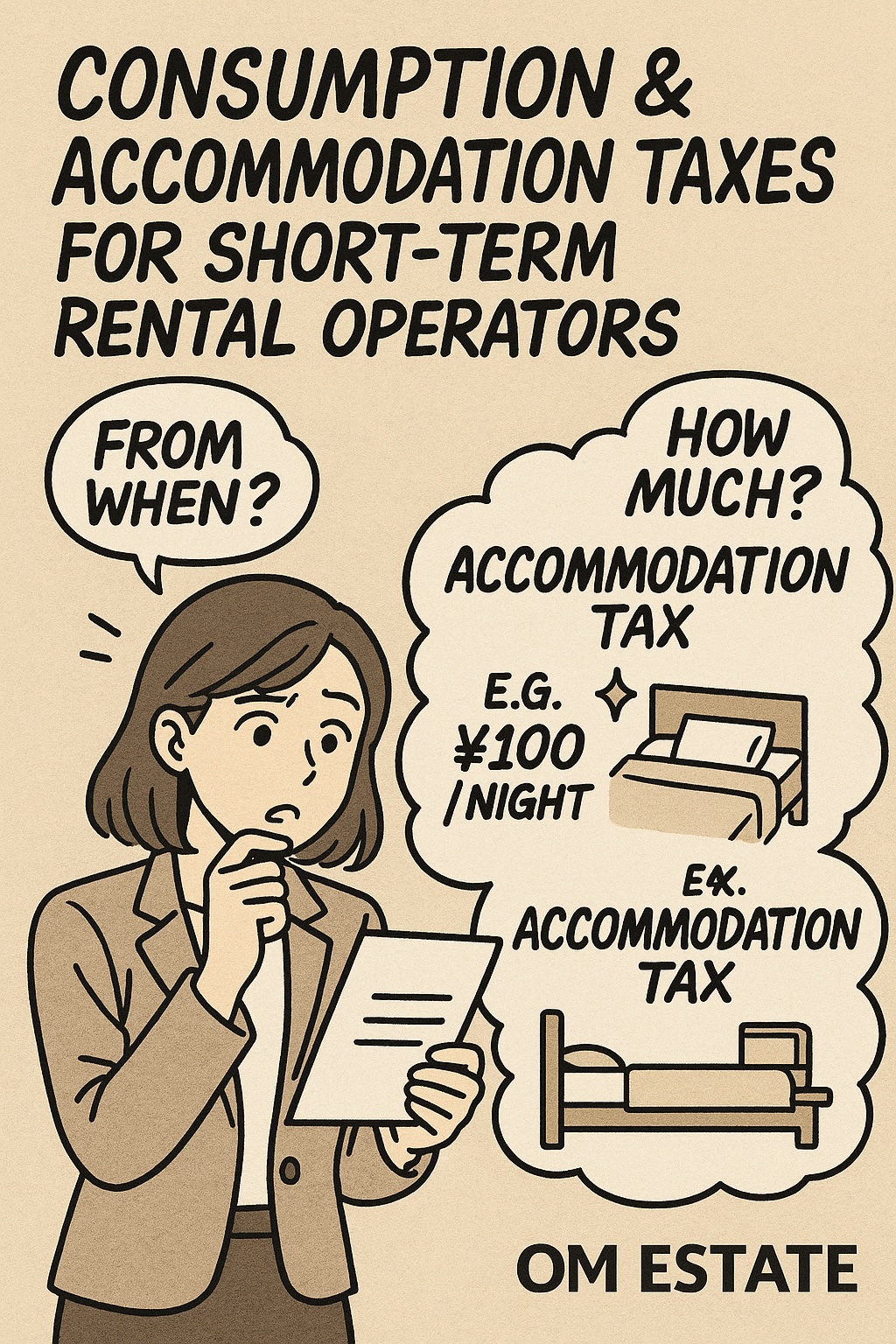
4. Accommodation tax snapshots (local examples)
Tokyo: per person per night JPY 100 for room rates ≥ JPY 10,000 and < JPY 15,000, JPY 200 for ≥ JPY 15,000, no tax below JPY 10,000.
Kyoto City: per person per night JPY 200 for < JPY 20,000, JPY 500 for ≥ JPY 20,000 and < JPY 50,000, JPY 1,000 for ≥ JPY 50,000.
Always confirm the local ordinance and collect and remit the tax separately.
5. Example (annual sales and payments)
Annual gross JPY 12,000,000, all taxable, ignoring input credits for simplicity.
With 10% consumption tax included, net‑of‑tax sales are ≈ JPY 10.9 million and the tax portion is ≈ JPY 1.09 million. In Tokyo with an average room rate of JPY 16,000 and 800 guest‑nights, accommodation tax is ≈ JPY 160,000 (JPY 200 × 800). In practice, adjust for input credits and any non‑taxable items.
6. Takeaway
Check the JPY 10,000,000 threshold first, decide on invoice registration, and book accommodation tax separately for timely remittance. Plan cash flow with the 180‑day cap, expected ADR, and occupancy so that tax payments are embedded in your operating model.